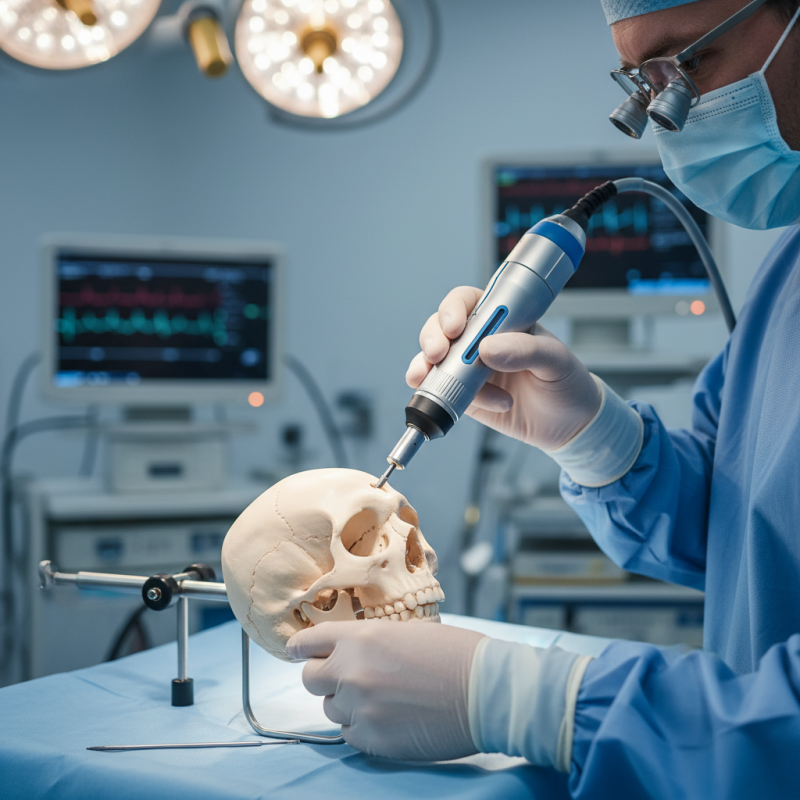
What is a neuro surgical drill and how does it work?
The neuro surgical drill is a vital tool in modern medicine. Used primarily in neurosurgery, it assists in precise bone removal and access to the brain. The device works by quickly rotating a specialized bit, helping surgeons navigate the delicate structures of the skull.
This drill is designed with advanced technology for accuracy and safety. Its motorized function allows for more controlled movements than manual tools. Surgeons can perform complex procedures more efficiently, reducing risks for patients. However, this technology does come with a learning curve.
Surgeons must understand the drill's capabilities and limitations. Mistakes can lead to unintended damage. Continuous training and practice are essential. The balance between precision and caution is crucial. Overall, the neuro surgical drill represents both innovation and responsibility in the operating room.
What is a Neurosurgical Drill?
A neurosurgical drill is a specialized tool used by neurosurgeons during brain surgeries. Its primary function is to create precise openings in the skull. This allows access to the brain for various procedures. Typically, the drill has a high-speed rotating mechanism. It can easily penetrate the hard bone of the skull, minimizing damage to surrounding tissues.
Using a neuro surgical drill requires skill and precision. Surgeons must be well-trained to handle the device safely. The drill can generate heat during operation, which can harm surrounding tissues. To mitigate this risk, surgeons often use saline to cool the drill tip. They monitor their pressure closely to avoid unnecessary trauma.
Tip: For those considering a career in neurosurgery, practice in a controlled environment is crucial. Understanding the mechanics of the drill can enhance effectiveness. Another important aspect is keeping up with advancements in technology. Techniques and tools evolve, impacting surgical outcomes. Embracing these changes is essential for professional growth and patient safety.
Neurosurgical Drill Efficiency Over Different Procedures
The Components of a Neurosurgical Drill System
A neurosurgical drill is a key instrument in brain surgery. Understanding its components is essential for grasping its function. A typical drill system consists of a motor, handpiece, and various drill bits. These components work together to perform precise cuts in the skull.
The motor is the drill's powerhouse. It generates rotation speed and torque. This allows the surgeon to make controlled movements. The handpiece connects to the motor and is designed for ease of use. It’s often lightweight for better handling during delicate procedures.
Tips for using a neurosurgical drill effectively: always check the equipment before surgery. Ensure the drill bits are sharp and sterile. This prevents complications during the operation. Surgeons must also practice on simulation models. Familiarity with the equipment enhances precision in real surgeries.
Lastly, it's important to note that despite advancements, errors can happen. Monitoring the drill's temperature is crucial. Overheating can cause damage to surrounding tissues. The learning curve can be steep. Continuous training and reflection on past surgeries can improve outcomes significantly.
How Neurosurgical Drills Operate Mechanically
Neurosurgical drills are specialized tools used in surgeries involving the brain and spinal cord. These drills operate using mechanical systems that allow precise control. Typically, they utilize a motorized mechanism that rotates the drill bit at incredible speeds. This allows neurosurgeons to make fine, controlled cuts in bone or tissue.
The drills are designed with a range of settings. Surgeons can adjust speed and torque based on the procedure. This adaptability is crucial, as different surgeries require different levels of precision. Some drills feature built-in safety mechanisms to avoid damaging surrounding areas. This is vital in delicate surgeries.
Tip: Always consider the condition of the drill before use. Regular maintenance can prevent malfunction during surgery.
Tip: Familiarize yourself with different drill bits. Each type serves a specific purpose, tailoring to the needs of the operation.
Not all drills perform identically. Variations in design can lead to differences in effectiveness. It's essential to reflect on whether the drill meets your specific surgical requirements. Each procedure may reveal flaws in technique or tool choice, reminding us to continuously evaluate our tools.
Common Applications in Neurosurgery
Neurosurgical drills are essential tools in modern brain surgery. They are designed to perform precise bone drilling during various neurosurgical procedures. The high rotational speeds and sharp cutting edges allow for efficient access to the brain while minimizing surrounding tissue damage. According to a report from the World Health Organization, over 1.5 million neurosurgical procedures are performed globally each year. These drills play a critical role in this vast landscape of surgical interventions.
Common applications for neuro surgical drills include craniotomies and spinal surgeries. During a craniotomy, the surgeon needs to remove a section of the skull to access the brain directly. This requires meticulous drilling to avoid damaging critical structures. Additionally, in spinal surgeries, these drills assist in creating openings for decompression and stabilization. A study indicated that 30% of neurosurgeons experienced complications related to drilling techniques. Despite advancements in technology, challenges remain in ensuring precision and safety during procedures.
Surgeons often reflect on the balance between speed and accuracy when using these drills. Faster drilling could lead to faster surgeries, but it also increases the risk of error. Surgeons report that they sometimes feel pressured to complete surgeries quickly, which can compromise the outcome. This highlights the need for ongoing training and awareness in the use of neurosurgical drills. Continuous improvement in techniques can lead to better patient outcomes while safeguarding the complex anatomy of the brain and spine.
What is a neuro surgical drill and how does it work? - Common Applications in Neurosurgery
| Feature | Description |
| Type | Electric, pneumatic, or battery-powered |
| Purpose | To create precise openings in the skull or bone |
| Common Uses | Tumor removal, aneurysm clipping, and implant placement |
| Drill Types | High-speed drills, low-speed drills |
| Safety Features | Depth gauges, irrigation systems, and feedback control |
| Material | Typically made from stainless steel and other biocompatible materials |
| Maintenance | Regular sterilization and inspection for wear |
| Training Requirement | Extensive training for neurosurgeons and OR staff |
Safety Measures and Considerations for Usage
A neurosurgical drill is a critical tool in brain surgery. Its primary function is to create precise openings in the skull. This process requires immense care. Safety measures are vital to prevent complications.
Before using a neurosurgical drill, ensure that all equipment is sterilized. A clean environment reduces the risk of infection. Also, double-check the drill settings. Incorrect settings can lead to excessive heat. This generates potential damage to surrounding tissues. Grounding the drill is essential to prevent electrical hazards during surgery.
Tips: Always wear protective eyewear and gloves. These safeguards reduce the risk of contamination. Regularly inspect the drill for wear and damage. A faulty drill can lead to serious consequences. Staff training is also crucial. All team members should understand the drill's operation. It's important to communicate effectively during procedures. Miscommunication can lead to errors that compromise patient safety.